Which Is Better: Scissor Jack or Bottle Jack?
When it comes to choosing a jack for lifting vehicles, two of the most common types are the scissor jack and the bottle jack. Both are designed to perform the same task - lifting a car for maintenance or emergency repairs - but they have different designs, mechanisms, and advantages. Determining which is better depends on several factors, including ease of use, lifting capacity, portability, stability, and intended application. In this essay, we will explore the key differences between scissor jacks and bottle jacks and discuss which might be better suited for different situations.
1. Design and Mechanism
The primary difference between a scissor jack and a bottle jack lies in their design and how they function.
Scissor Jack: The scissor jack gets its name from its scissor-like mechanism. It consists of a crisscrossing metal frame that expands and contracts as you turn a screw in the center. As the screw rotates, the arms of the jack spread out, raising the car. Scissor jacks are typically manual and operated by hand, using a crank or a wrench to turn the screw. They are often included as standard equipment in vehicles for roadside emergencies because of their compact size and simplicity.
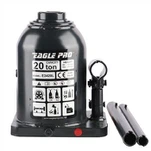
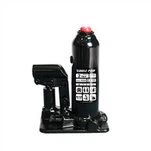
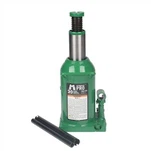
Bottle Jack: A bottle jack operates on hydraulic pressure. It has a cylindrical, bottle-shaped body with a piston inside. When the user pumps the handle, hydraulic fluid is compressed, which pushes the piston upward and lifts the vehicle. Bottle jacks require less physical effort to operate compared to scissor jacks, thanks to the hydraulic system. They are commonly used for lifting heavier vehicles due to their higher lifting capacities.
2. Lifting Capacity and Strength
One of the key factors in deciding which jack is better is lifting capacity.
Bottle Jacks are generally considered superior in terms of strength and lifting capacity. They can lift vehicles that weigh anywhere from 2 tons to over 50 tons, depending on the model. This makes bottle jacks a better choice for larger, heavier vehicles such as SUVs, trucks, or industrial equipment. Their hydraulic mechanism allows for lifting significant weight with minimal effort, making them ideal for both personal and professional use.
Scissor Jacks, on the other hand, are usually designed to lift smaller vehicles. Most scissor jacks have a lifting capacity between 1 and 2 tons, which is sufficient for lifting small cars or compact vehicles. However, they are not as powerful as bottle jacks, and trying to lift heavier vehicles with a scissor jack could result in mechanical failure or unsafe conditions.
3. Stability and Safety
Stability is another important consideration when comparing scissor jacks and bottle jacks.
Scissor Jacks tend to provide better stability in certain situations, particularly on level and flat surfaces. Their wide base and low profile allow for a more stable lift, reducing the risk of the vehicle tipping over. The mechanical nature of the scissor jack ensures that it locks into place at each level of lift, providing consistent support. This makes scissor jacks a safer option for vehicles that are smaller or have low ground clearance, as they can be placed securely underneath the vehicle's jacking points.
Bottle Jacks, while stronger, have a narrower and taller design. This can make them less stable when lifting vehicles, especially on uneven or sloped surfaces. The vertical structure of the bottle jack can make it prone to tipping if the ground isn't completely level. Additionally, the lifting height of a bottle jack is typically higher than that of a scissor jack, which can be problematic for vehicles with low ground clearance, as the jack may not fit under the car in its fully lowered position.
4. Portability and Ease of Use
Portability and ease of use are important factors, particularly for drivers who may need to use a jack in emergency roadside situations.
Scissor Jacks are typically more portable due to their small, lightweight, and compact design. They are often included in the trunk of cars as part of the spare tire kit, making them easily accessible during emergencies. Scissor jacks also don't take up much space, so they can be stored without much hassle. However, using a scissor jack requires manual effort, as you need to crank the handle to lift the vehicle, which can be tiring, especially if the vehicle is heavy or the user has limited strength.
Bottle Jacks are usually heavier and bulkier than scissor jacks. While they are not as portable, they are generally easier to use because of their hydraulic system, which requires less effort to lift the vehicle. The handle of a bottle jack simply needs to be pumped a few times to raise the car. However, due to their size and weight, bottle jacks may not be as convenient to carry in the car for emergency situations unless space is not a concern.
5. Cost and Affordability
When it comes to cost, scissor jacks are generally the more affordable option. They are simpler in design and do not require the hydraulic components that make bottle jacks more expensive. For basic use or occasional roadside emergencies, scissor jacks provide an inexpensive solution.
Bottle jacks, due to their hydraulic mechanism and higher weight capacity, tend to be more expensive. However, for those who need to lift heavier vehicles regularly or who prioritize ease of use, the higher cost of a bottle jack may be justified.