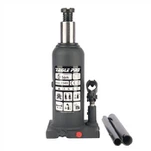
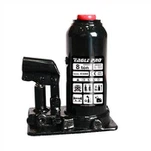
A bottle jack, also known as a hydraulic bottle jack or a piston jack, is a mechanical device used for lifting heavy loads, such as vehicles or heavy machinery, by applying force through a hydraulic mechanism. This versatile tool is widely employed in automotive repair shops, construction sites, industrial settings, and even in home garages for tasks that require lifting and supporting heavy objects. In this comprehensive overview, we will delve into the construction, operation, applications, and safety considerations associated with bottle jacks.
Construction and Components:
A bottle jack consists of several key components that work together to provide powerful lifting capabilities:
Base Plate: The base plate is the flat, sturdy platform that rests on the ground or a solid surface. It provides stability and support for the jack during lifting operations.
Hydraulic Cylinder: The hydraulic cylinder is a cylindrical tube with a piston inside. It is the core component responsible for lifting and lowering heavy loads. The piston is sealed within the cylinder, creating a closed hydraulic system.
Handle or Pumping Mechanism: Bottle jacks typically have a handle or pumping mechanism connected to the hydraulic cylinder. By pumping the handle, hydraulic pressure is generated, causing the piston to rise and lift the load.
Release Valve: A release valve or control knob allows for controlled lowering of the load. By turning the valve counterclockwise, the hydraulic fluid is released, allowing the piston to descend slowly.
Saddle: The saddle is a flat or contoured platform that comes into direct contact with the load being lifted. It helps distribute the load evenly and prevents damage to the object.
Reservoir and Hydraulic Fluid: Bottle jacks are filled with hydraulic fluid, typically oil, which is stored in a reservoir within the hydraulic cylinder. The hydraulic fluid is pressurized by pumping the handle and transferred to the piston, resulting in upward movement.
Operation of a Bottle Jack:
The operation of a bottle jack is relatively straightforward and follows these general steps:
Position the Jack: Place the bottle jack on a stable, level surface, ensuring that the base plate is firmly in contact with the ground or supporting structure.
Position the Load: Position the saddle of the jack under the load, ensuring that it makes secure contact with the load's lifting point.
Pumping: Grasp the jack's handle and pump it up and down to generate hydraulic pressure. This action forces the piston to rise, gradually lifting the load off the ground or support surface.
Monitoring: While lifting, it is essential to monitor the load and ensure that it is stable and properly balanced.
Lowering: To lower the load, turn the release valve or control knob clockwise slowly. This releases the hydraulic pressure, allowing the piston to descend and lower the load safely.
Applications of Bottle Jacks:
Bottle jacks find application in a wide range of industries and scenarios due to their lifting capabilities and compact design. Some common uses include:
Automotive Repairs: Bottle jacks are frequently used in automotive repair shops to lift vehicles for tire changes, brake repairs, and undercarriage work.
Construction and Building: Construction workers use bottle jacks to lift heavy structural elements, support beams, and machinery during construction or renovation projects.
Industrial Maintenance: In industrial settings, bottle jacks are employed for maintenance tasks such as machinery installation, alignment, and maintenance.
Agriculture: Farmers and agricultural workers use bottle jacks for lifting and stabilizing heavy farm equipment and machinery.
Emergency Situations: Bottle jacks are valuable tools for emergency responders, as they can be used to lift vehicles or heavy objects to rescue trapped individuals.
Home and DIY: Homeowners and DIY enthusiasts use bottle jacks for various tasks, including raising and leveling structures, lifting vehicles or trailers, and supporting heavy objects during repairs.
Safety Considerations:
While bottle jacks are powerful tools, their safe and proper use is essential to prevent accidents or injuries. Here are some safety considerations:
Weight Limit: Never exceed the maximum weight capacity or lifting capacity specified by the manufacturer for the particular bottle jack model.
Stability: Ensure that the jack is placed on a stable, level surface to prevent tipping or leaning.
Balancing: Make sure the load is evenly balanced on the saddle to prevent tilting or shifting during lifting.
Maintenance: Regularly inspect the jack for signs of wear, damage, or hydraulic fluid leaks. Damaged jacks should be repaired or replaced promptly.
Positioning: Always position yourself and others away from the load and any potential hazards while lifting and lowering.
Safety Standards: Follow safety guidelines and standards established by regulatory authorities, such as OSHA (Occupational Safety and Health Administration) in the United States.